
More details
Collapse details
Date Published:
Filesize:
- July 1, 2025
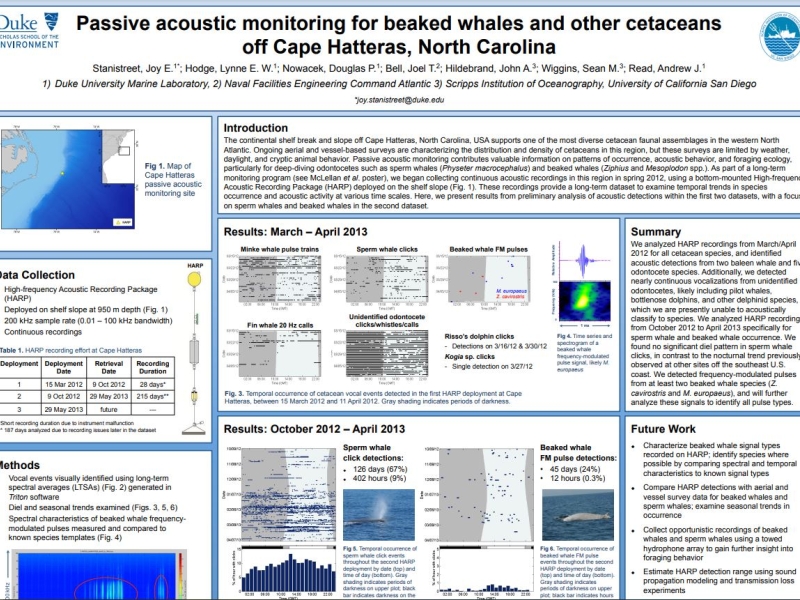
Beaked whales (Family Ziphiidae; Order Cetacea) are the least well-described group of marine mammals because they conduct very long deep dives, spend little time on the surface where they display cryptic behavior, and are difficult to identify due to the similarity between species. Beaked whales are also known to be susceptible to high-energy sound sources in the ocean (e.g. seismic research, sonars used by military activities).
- 1,136.54 KB
More details
Collapse details
Date Published:
Filesize:
- June 1, 2014
This report summarizes information from 24 U.S. Navy-funded aerial surveys of pinniped haulout sites in the inland waters of Washington State conducted between March 2013 and February 2014 by Washington Department of Fish and Wildlife.
- 2,946.44 KB
More details
Collapse details
Date Published:
Filesize:
- April 1, 2014
During this survey, the visual team surveyed 4,504 kilometers (km) of ‘full-effort,’ which included 349 km of ‘transit-effort.’ There was an additional 375 km of ‘fog-effort’ (transect and transit). Based on total effort, there were 802 sightings (1,998 individuals) of 13 confirmed marine mammal species, with an additional 162 sightings (228 individuals) of unidentified cetaceans and pinnipeds (including those recorded on transit and during off-effort mode).
- 12,416.19 KB
More details
Collapse details
Date Published:
Filesize:
- August 5, 2009
Aerial surveys were conducted in conjunction with two US Navy (Navy) Major Training Events (MTE) involving mid-frequency active sonar (MFAS) and explosives in October (Oct) and mid-November (Nov) 2008 in the Southern California Range Complex (SOCAL) off San Diego, California. The purpose of this survey was to monitor potential effects or lack of observable effects of MFAS and explosives on mammals and sea turtles (MM/ST) during a MTE from 17-21 Oct and beginning one day after a MTE from 15-18 Nov.
- 4,083.50 KB
More details
Collapse details
Date Published:
Filesize:
- August 6, 2025
The Alaska Fisheries Science Center (AFSC), NOAA Fisheries, with support from the U.S. Navy, conducted line transect surveys in Behm Canal and adjacent areas in the spring of 2023 and fall of 2024 to obtain estimates of density and abundance of cetaceans and information on marine mammal distribution and occurrence.
- 9,210.00 KB
Complete
Aerial Surveys of Marine Mammals Conducted in the Inland Puget Sound Waters of Washington, summer 2013 – winter 2016
Project Objectives
1) Conduct aerial surveys during four seasonal periods within the inland Puget Sound Survey Area to assess potential differences in seasonal distribution, numbers, and behavioral state patterns of marine mammals; 2) Collect data to estimate densities of marine mammals in the inland Puget Sound waters for species with sufficient sightings; 3) Estimate abundance for each marine mammal species seen an adequate number of times; 4) Document the distribution and habitat use of each species observed; 5) Document and describe behaviors seen without performing focal follows.
Complete
Assessment of Marine Mammal Vocal Response to Sonar
Project Objectives
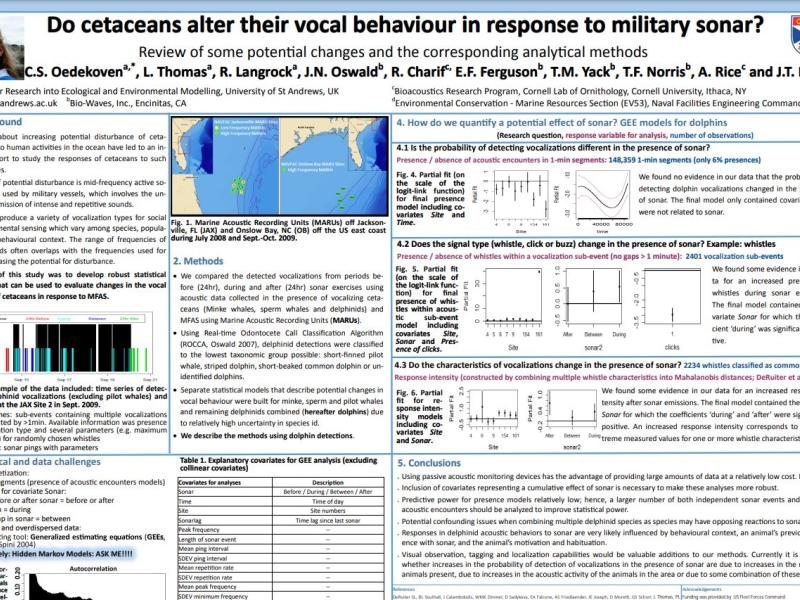
Develop analytic methods to evaluate the vocal response of odontocetes and mysticetes to sonar from navy training activities
Current
Estimation of Received Levels of MFAS and Behavioral Response of Marine Mammals at PMRF
Project Objectives
Further our understanding of the Monitoring Questions: 1) What is the occurrence and estimated received levels of MFAS on 'blackfish', humpback, minke, sperm and Blainville's beaked whales within the PMRF instrumented range? and 2) What, if any, are the short term behavioral responses of 'blackfish,' humpback, minke, sperm and Blainville's beaked whales when exposed to MFAS/explosions at different levels/conditions at PMRF?
Current
Long Term Acoustic Monitoring of Marine Mammals Utilizing the Instrumented Range at Pacific Missile Range Facility (PMRF)
Project Objectives
Improve understanding of the long term trends in occurrence of marine mammals (e.g., minke, humpback, fin, Bryde's, Blainville's) on the PMRF range. Examine what, if any, acoustic and physical behavioral responses occur to Navy activities.
Current
Mid-Atlantic Nearshore & Mid-shelf Baleen Whale Monitoring
Project Objectives
Assess occurrence, habitat use, and baseline behavior of baleen whales in the mid-Atlantic region
Current
Mid-Atlantic Offshore Cetacean Study
Project Objectives
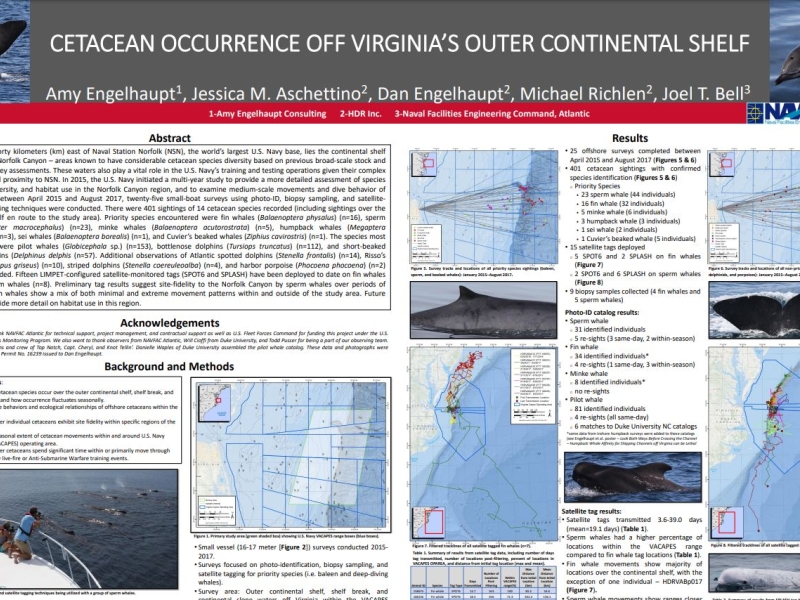
Assess occurrence, habitat use, and baseline behavior of cetaceans in the offshore and continental shelf break region of the VACAPES OPAREA
Current
Passive Acoustic Monitoring for Mid-Atlantic Baleen Whales
Project Objectives
Monitor large whale occurrence in the Mid-Atlantic
Complete
Passive Acoustic Monitoring of Marine Mammals Using Gliders in Marianas
Project Objectives
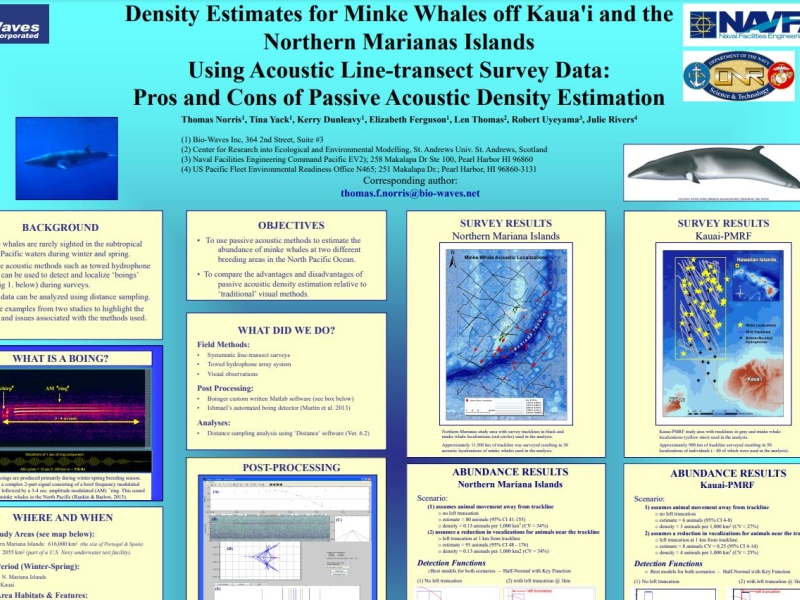
Identify acoustically distinct species of beaked whales, odontocetes, and baleen whales that occur in the Mariana Islands; develop a better understanding of marine mammal distribution, habitat use, and abundance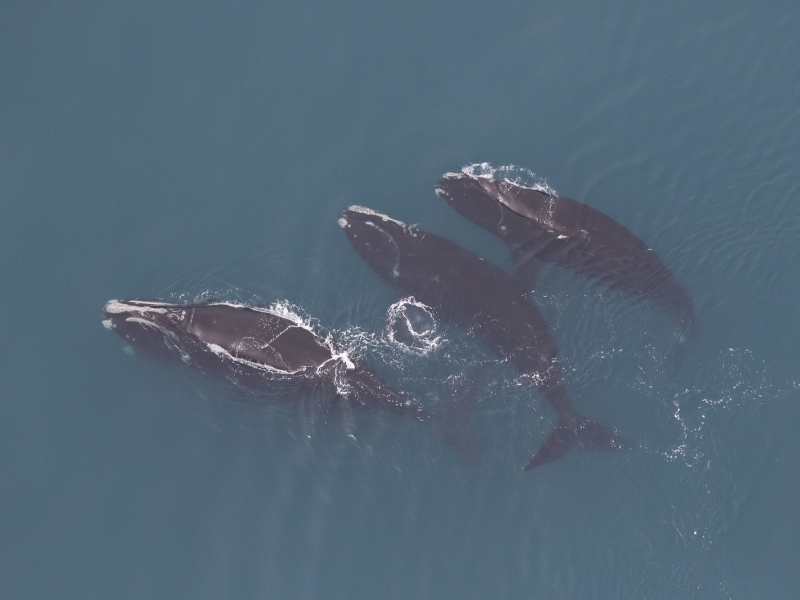
2024-2025 Large Whale Season Summary
March 24, 2025
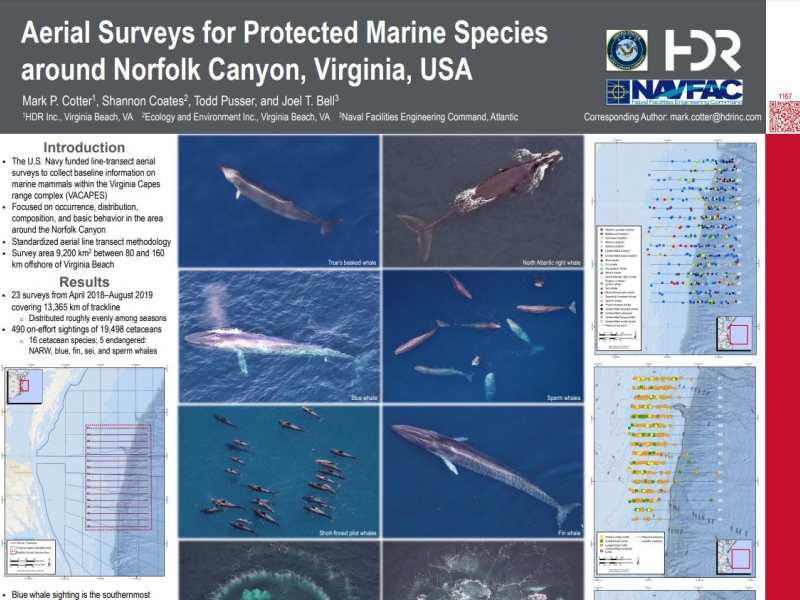
We have two separate efforts focusing on cetaceans off the coast of Virginia. The first is our Offshore (Outer Continental Shelf) Cetacean Study, which focuses primarily on deep diving odontocetes like sperm whales. The second effort is our Nearshore and Mid-Shelf Baleen Whale Monitoring Project.
Large Whale Action in the Mid-Atlantic
January 30, 2024
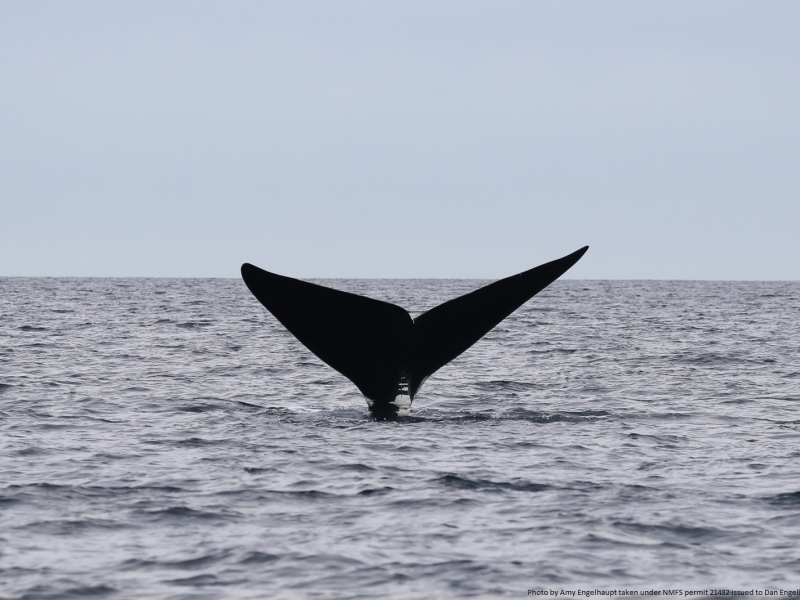
After a relatively slow start to the 2023-2024 large whale season, things are picking up here in the Mid-Atlantic. Last week was the busiest we’ve had so far this season for several of our projects as well as adjacent colleagues.
Great Day for a Mid-Atlantic Offshore Survey
April 20, 2015
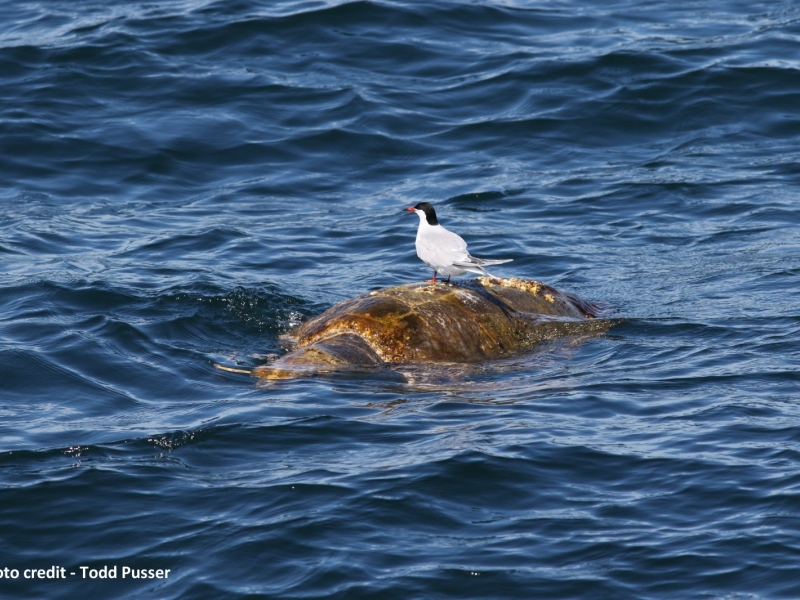
Pelagic cetaceans and sea turtle sightings.